II. Excerpt(s)
Nancy N. Chen (2003)
Nancy N. Chen (2003)
“Masters were believed to be able to immerse themselves in chaos and emerge with true power in health and wealth. By being in control of both material wealth and symbolic capital, they were capable of upstaging state leaders. Not only could they harness tremendous powers and thus garner thousands of followers, even numbering state officials among them, they were widely viewed as having the ultimate powers that qi energy could bring: longevity, prosperity, and superhuman abilities. In sum, these people accumulated power in a period when capital, both material and symbolic, became increasingly more crucial to one’s status and the social economy. During public performance, masters were the center of attention, whether they lectured on the healing powers of qi or energetically demonstrated such abilities. In parks masters were equally charismatic as they healed patients surrounded by intimate groups of supplicants” (p. 61).
III. Outside Example(s)
III. Outside Example(s)


IV. Analysis
Introduction
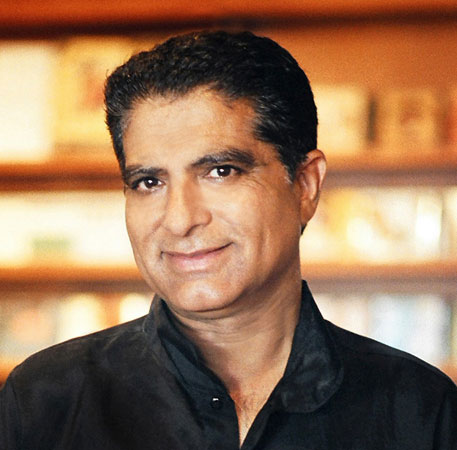
The particular excerpt I chose from Breathing Spaces is from Chapter 3: “Riding the Tiger.” While in the previous two chapters Chen does make reference to the qigong masters, it is within this chapter that she truly dives into “how they became established authorities” (p. 61). It is this framework of “masters” that I find intriguing, especially within the construct of the charismatic leader. For my outside examples I have chosen several images to convey where I will direct my analysis. First is an image of game pieces forming an analogy of the leader versus the group (followers). Next I have included images of two people who have what could be termed a mass following: Deepak Chopra and Oprah Winfrey. Their names are also dropped in discussions of charismatic leadership. For the purpose of my analysis, I observe qigong masters, Chopra and Oprah all as holding the title of charismatic leaders.
Chopra Comparison (Dr. Mistry excursion)
Earlier in her text, Chen mentions Deepak Chopra as a modern example of a “guru of the new age movement” (p. 29) in the realm of healing techniques as a commodity. She suggests “Popular healing in such instances exists not simply because of the vast networks generated by such charismatic healers but also because of the commodification of healing knowledge that speaks to ordinary desires to achieve order and balance in complex times” (p. 30). The “vast networks” Chen is referring to is Chopra’s use of the Internet to reach new demographics. However, it is not the tactics alone of such masters, gurus, or leaders that seduce a following. Instead, I would argue (as I also inferred from Chen) that societal fluxes, such as political, economic, and cultural variables, all contribute to the popularity and spread of a healing system. In the context of qigong masters Chen states, “There are no standard bases to evaluate the qualifications of these healers beyond the networks of belief that led to their rapid rise” (p. 30). While the master might have used China’s changing economy to their advantage (arguably if they did so knowingly or not), the followers that they attracted were not blind consumers, instead drawing upon collective resistance towards socialized medicine.
Critics might place Chopra at the crux of commercializing alternative healing especially Ayurvedic practices. I would argue that it would be difficult to dissect what ignited his popularity; whether charismatic abilities, use of media, or willing and seeking participants. Each of these factors spiral together with the status of the United States in regards to health care during the late 1980’s through the 1990’s when he started to gain admirers. In regards to the US, Chen remarks, “the networks of practitioners and clientele have gradually coalesced into an alternative healing community set in relief to the biomedical establishment” (p. 26). I would even argue that Chopra, despite his MD status, does feed a certain desire in the US for “folk” medicine. In Fluent Bodies (2002), Langford suggests “There are practitioners, however working in the interstices between institutional Ayurveda and “folk” practice, who make it their job to satisfy those amorphous desires for a healing tradition, in every sense of that phrase.” (p. 188). Here she is referring to Dr. Mistry, who is contested in the professional Ayurvedic community as being a fake. While, Chopra does not signify quackery, like Dr. Mistry he provides an avenue for interested patients in acquiring a certain alternative healing system (i.e., on his site there is an Ayurvedic quiz that brings results in what products or activities will bring up your well-being).
The interesting aspect about Dr. Mistry’s popularity is that he accommodated what they were seeking by using pulse reading. Langford states “a practitioner’s ability to diagnose a patient’s illness simply by feeling his or her pulse is often taken as the quintessential sign of “traditional” Ayurveda” (p. 191). Similarly, there were collective guidelines for what a great qigong master was able to demonstrate in healing. Chen states, “because practitioners could self-heal, the possession of “true” qigong capabilities (gongneng) to exert qi and heal others was frequently invoked as a primary characteristic of a master” (p. 68). In both these aspects, the followers (or patients) are satisfied because their leaders (or practitioners) fulfill the expectation of certain powers or methods.
Oprah comparison
The second individual I chose to include in this analysis is Oprah Winfrey. While she does not directly represent a “guru” in the sense that Chopra does, I would argue that her system of leadership is very much intertwined with systems of healing. However I do not draw this parallel in the obvious case of her show and website engaging alternate systems of healing. Instead, the significance I want to point out is how her “act” of telling her story to her audience suggests a specific way to gain “good” self-esteem through digression. As Eva Illouz (2003) states “Oprah subtly invites viewers and guest to imitate her own life, thus creating a powerful charismatic relationship based on the fact that she indeed performs the goods she promises to deliver: namely, the symbolic tools to reform one’s life and get better” (p. 45).
Likewise, in Chen’s analysis of qigong masters, she suggests “The appeal of these masters depended less on their personalities than on the actual effects they had on people. Such charisma could not only be found on the stages from which masters presented lectures to large audience but also amplified in the media, and effectively navigating and even managing local media became a means for masters to legitimize themselves” (p. 65). With Oprah, I would argue that her personality alone did not expand her audience. The technique of retelling her stories and thus opening a dialogue for shared suffering and compassion are the effects that led people to view her as an expert. In the case of qigong masters, their abilities of controlling qi in front of a group to heal or demonstrate techniques created the credibility needed to designate their expertise. In both instances, the use of media was not only a legitimizing tool, but also a symbol of leadership.
Conclusion
The particular excerpt I chose from Breathing Spaces is from Chapter 3: “Riding the Tiger.” While in the previous two chapters Chen does make reference to the qigong masters, it is within this chapter that she truly dives into “how they became established authorities” (p. 61). It is this framework of “masters” that I find intriguing, especially within the construct of the charismatic leader. For my outside examples I have chosen several images to convey where I will direct my analysis. First is an image of game pieces forming an analogy of the leader versus the group (followers). Next I have included images of two people who have what could be termed a mass following: Deepak Chopra and Oprah Winfrey. Their names are also dropped in discussions of charismatic leadership. For the purpose of my analysis, I observe qigong masters, Chopra and Oprah all as holding the title of charismatic leaders.
Chopra Comparison (Dr. Mistry excursion)
Earlier in her text, Chen mentions Deepak Chopra as a modern example of a “guru of the new age movement” (p. 29) in the realm of healing techniques as a commodity. She suggests “Popular healing in such instances exists not simply because of the vast networks generated by such charismatic healers but also because of the commodification of healing knowledge that speaks to ordinary desires to achieve order and balance in complex times” (p. 30). The “vast networks” Chen is referring to is Chopra’s use of the Internet to reach new demographics. However, it is not the tactics alone of such masters, gurus, or leaders that seduce a following. Instead, I would argue (as I also inferred from Chen) that societal fluxes, such as political, economic, and cultural variables, all contribute to the popularity and spread of a healing system. In the context of qigong masters Chen states, “There are no standard bases to evaluate the qualifications of these healers beyond the networks of belief that led to their rapid rise” (p. 30). While the master might have used China’s changing economy to their advantage (arguably if they did so knowingly or not), the followers that they attracted were not blind consumers, instead drawing upon collective resistance towards socialized medicine.
Critics might place Chopra at the crux of commercializing alternative healing especially Ayurvedic practices. I would argue that it would be difficult to dissect what ignited his popularity; whether charismatic abilities, use of media, or willing and seeking participants. Each of these factors spiral together with the status of the United States in regards to health care during the late 1980’s through the 1990’s when he started to gain admirers. In regards to the US, Chen remarks, “the networks of practitioners and clientele have gradually coalesced into an alternative healing community set in relief to the biomedical establishment” (p. 26). I would even argue that Chopra, despite his MD status, does feed a certain desire in the US for “folk” medicine. In Fluent Bodies (2002), Langford suggests “There are practitioners, however working in the interstices between institutional Ayurveda and “folk” practice, who make it their job to satisfy those amorphous desires for a healing tradition, in every sense of that phrase.” (p. 188). Here she is referring to Dr. Mistry, who is contested in the professional Ayurvedic community as being a fake. While, Chopra does not signify quackery, like Dr. Mistry he provides an avenue for interested patients in acquiring a certain alternative healing system (i.e., on his site there is an Ayurvedic quiz that brings results in what products or activities will bring up your well-being).
The interesting aspect about Dr. Mistry’s popularity is that he accommodated what they were seeking by using pulse reading. Langford states “a practitioner’s ability to diagnose a patient’s illness simply by feeling his or her pulse is often taken as the quintessential sign of “traditional” Ayurveda” (p. 191). Similarly, there were collective guidelines for what a great qigong master was able to demonstrate in healing. Chen states, “because practitioners could self-heal, the possession of “true” qigong capabilities (gongneng) to exert qi and heal others was frequently invoked as a primary characteristic of a master” (p. 68). In both these aspects, the followers (or patients) are satisfied because their leaders (or practitioners) fulfill the expectation of certain powers or methods.
Oprah comparison
The second individual I chose to include in this analysis is Oprah Winfrey. While she does not directly represent a “guru” in the sense that Chopra does, I would argue that her system of leadership is very much intertwined with systems of healing. However I do not draw this parallel in the obvious case of her show and website engaging alternate systems of healing. Instead, the significance I want to point out is how her “act” of telling her story to her audience suggests a specific way to gain “good” self-esteem through digression. As Eva Illouz (2003) states “Oprah subtly invites viewers and guest to imitate her own life, thus creating a powerful charismatic relationship based on the fact that she indeed performs the goods she promises to deliver: namely, the symbolic tools to reform one’s life and get better” (p. 45).
Likewise, in Chen’s analysis of qigong masters, she suggests “The appeal of these masters depended less on their personalities than on the actual effects they had on people. Such charisma could not only be found on the stages from which masters presented lectures to large audience but also amplified in the media, and effectively navigating and even managing local media became a means for masters to legitimize themselves” (p. 65). With Oprah, I would argue that her personality alone did not expand her audience. The technique of retelling her stories and thus opening a dialogue for shared suffering and compassion are the effects that led people to view her as an expert. In the case of qigong masters, their abilities of controlling qi in front of a group to heal or demonstrate techniques created the credibility needed to designate their expertise. In both instances, the use of media was not only a legitimizing tool, but also a symbol of leadership.
Conclusion
I would like to revisit some of the arguments I made above about charismatic leadership. In revisiting the chosen excerpt, Chen reiterates the role economic and political forces played in creating such masters. In particular she highlights prosperity in relation to China’s changing market that extenuated capital gains. Qigong masters, through their followers support (e.i. purchasing tickets, literature, and other materials) were very comfortable financially. In a sense they demonstrated ultimately what the harnessing of qi brought, not only health, but also financial freedom. In the present day, Oprah and Chopra exude a sense of prosperity as well. They are both very wealthy individuals within the US context (perhaps on a global context as well). I find it interesting that such charismatic leaders wealth is not a source of resistance from the public who enjoy their “services.” This is in direct contrast to the public view of state officials wealth: instead of being a demonstration of prosperity, state officials become the symbol of greed and corruption. Perhaps the main difference is that the qigong masters gained wealth through sharing healing systems, instead of enforcing state regulations. This leads me back to my main argument that charismatic leaders alone do not induce a following. Instead societal factors play a key role in shaping how a group will become enthralled with a leader. Also, the leaders ability to satisfy what the group is seeking is crucial in determining the popularity of the leader and the system of healing they are advocating. In the end, the leader versus follower construct is interchangeable: Who truly is benefiting more?
V. Resources
Literature
1. Chen, N. N. (2003). Breathing Spaces: Qigong, Psychiatry, and Healing in China. New York:
1. Chen, N. N. (2003). Breathing Spaces: Qigong, Psychiatry, and Healing in China. New York:
Columbia University Press.
2. Illouz, E. (2003). The Success of a Self-Failed Woman. In Oprah Winfrey and the Glamour of Misery: An Essay on Popular Culture (pp. 77-119). New York: Columbia University Press.
3. Langford, J. M. (2002). Fluent Bodies: Ayurvedic Remedies for Postcolonial Imbalance.
Durham: Duke University Press.
Internet Sources
1. Oprah website: http://www.oprah.com/
Images
2. Deepak Chopra: http://ww1.prweb.com/prfiles/2007/02/07/503654/Deepakwebpr.jpg
3. Oprah Winfrey: http://usliberals.about.com/od/celebrityactivists/p/OprahActivist.htm